Chip Independence: Meta's Production Use of Google TPUs Signals a Break from Nvidia
The integration of Google's custom AI silicon into Meta's core infrastructure marks a tangible shift in the competitive landscape of high-performance computing.
By Malcolm Davis ·
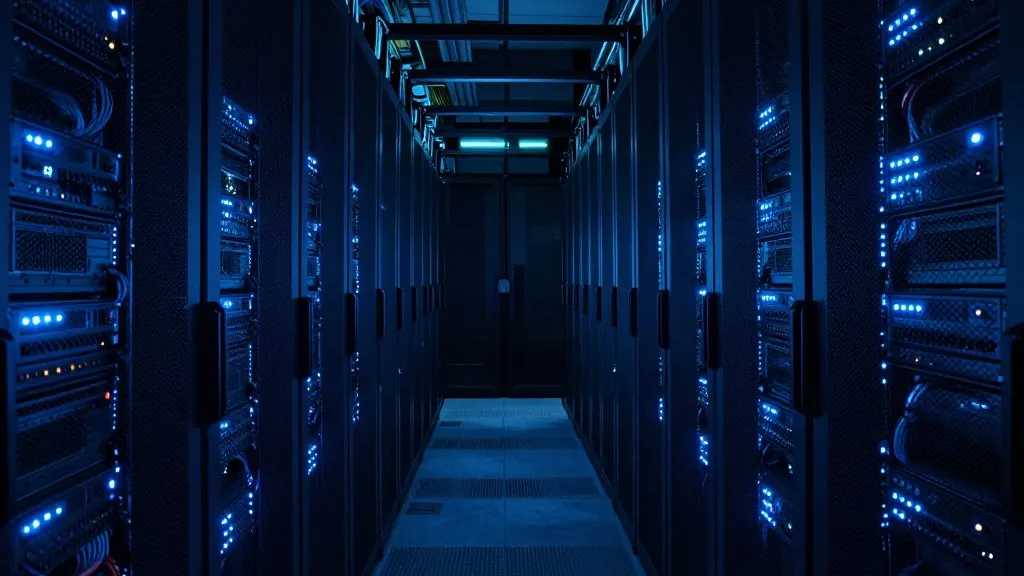
The long-standing assumption that Meta’s artificial intelligence infrastructure is exclusively tied to Nvidia’s hardware has just been challenged by a significant operational shift. Google’s Tensor Processing Units (TPUs) are now actively serving AI workloads in production at Meta, a move that bypasses the traditional reliance on Nvidia’s GPUs for large-scale inference. This transition is not merely experimental; it represents a permanent architectural change for one of the world's largest AI users, potentially altering the balance of power in the semiconductor market.
The shift hinges on a new software bridge. Previously, running Google’s TPUs required the use of JAX, a framework distinct from the industry-standard PyTorch. To change this, Google, Meta, and the SGLang team collaborated to create a PyTorch-native version of the SGLang inference engine, alongside an open-source adaptation of vLLM. This development allows Meta to deploy its existing PyTorch workloads directly onto TPUs without the need for extensive code rewriting, effectively neutralizing the software barrier that previously kept the two ecosystems separate.
This is not the first time Meta and Google have intersected in the TPU space. An older bridge known as PyTorch/XLA existed as a predecessor to the current solution. However, reports indicate that Meta research teams utilized TPUs through that older bridge between 2020 and 2023 before canceling those contracts. The current push appears more permanent, with Meta’s PyTorch-TPU lead, Zongwei Zhou, confirming that the new SGLang-TorchTPU is already running in production. He credited the effort to a "close three-way collaboration" between the three organizations, noting that the engine provides a "remarkably mature, PyTorch-native serving stack."
The strategic rationale is clear: diversification. Jana van Greunen, director of PyTorch engineering at Meta, stated that the company "cannot be constrained by a single hardware architecture." By adopting Google’s hardware, Meta gains the flexibility to deploy PyTorch workloads on a different silicon platform. While the exact location of these production TPUs remains unclear, industry talks last year suggested a timeline of Google Cloud TPU rentals beginning in 2026, with potential hardware purchases following in 2027. Meta is reportedly bound by a multi-year rental agreement, signaling a long-term commitment to the partnership.
The timing of this announcement is notably synchronized with broader industry trends. It came just one day after Amazon revealed it was open-sourcing TorchNeuron, its own native PyTorch backend for its Trainium chips. Both moves appear designed to erode Nvidia’s software lock-in, offering developers viable alternatives to the dominant CUDA ecosystem. For California-based tech companies, this suggests a future where hardware selection is less about brand loyalty and more about specific workload optimization.
Performance metrics suggest the new integration is competitive. According to Inferact, a startup involved in building the vLLM-TorchTPU, a tuned setup serving the 2.8-trillion-parameter Kimi K3 model achieved over 700 tokens per second per user on seventh-generation Ironwood TPUs. This outperformed a comparable setup on 16 Nvidia GB200 chips, which reached 452 tokens per second. Furthermore, specific kernels for other models demonstrated throughput roughly 1.4 to 2 times higher than the Nvidia baseline at small batch sizes when speculative decoding was not used.
Looking ahead, the ecosystem is set to expand rapidly. SGLang-TorchTPU will begin supporting additional models, starting with DeepSeek V4.1 Flash and Reflection Beam. RadixArk, the startup behind the engine, aims to achieve "Day 0" support for new open models by the first quarter of 2027, ensuring that new AI models are compatible with TPUs from the moment they are released. Further details on these developments are expected to be shared at the SGLang Summit 2026, scheduled for November 12-13 in San Francisco.
For the California tech community, this development underscores a growing consensus that no single chipmaker holds a monopoly on AI leadership. As Meta, Amazon, and Google continue to refine their proprietary hardware and software stacks, the era of Nvidia’s unchallenged dominance may be entering a period of intense scrutiny and competition.
Source: Tom's Hardware