Tesla's U-turn: Building its own maps to fix FSD's biggest blind spots
Tesla is developing an internal mapping system to correct persistent errors in speed limit recognition and routing, marking a significant departure from its previous vision-only strategy.
By Jonathan Pierce ·
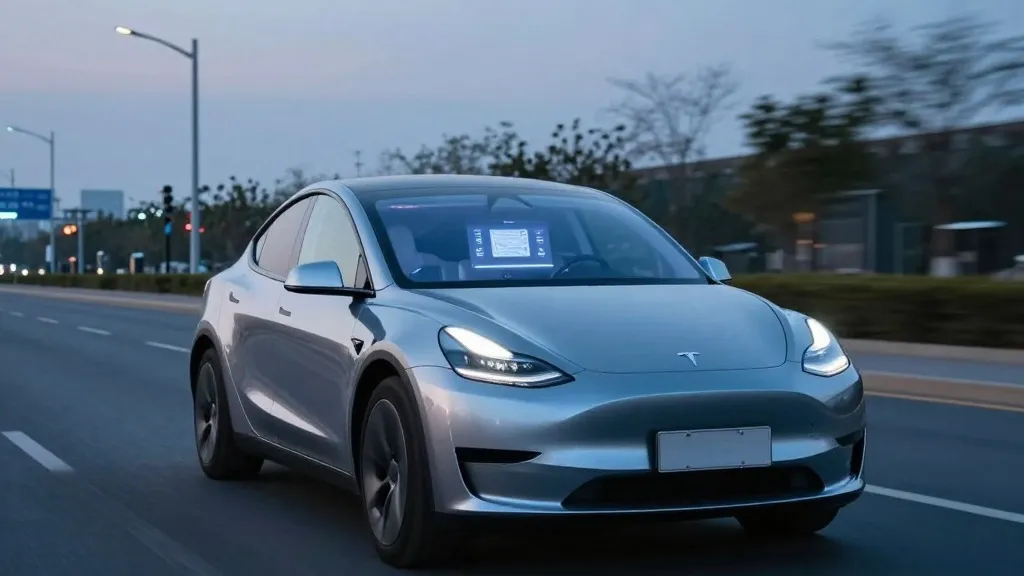
Tesla has long marketed its self-driving technology as a purely visual solution, but the company is now engineering its own mapping infrastructure to resolve specific failures in its Full Self-Driving (FSD) system. The announcement was made during the Q3 2026 earnings call, where leadership acknowledged that external map data is insufficient for the precision required by modern autonomous driving.
The decision to create an in-house map represents a major strategic pivot. For years, Tesla executives, including CEO Elon Musk, argued that relying on detailed maps made driving systems brittle and less adaptable. By building its own data layer, Tesla is effectively acknowledging that its cameras and AI models need additional environmental context to perform reliably in complex urban scenarios.
Three primary issues are driving this development. First, the system frequently misreads or ignores posted speed limits. Second, it struggles with accurate route selection for common commutes. Third, it faces difficulties in executing parking maneuvers. These are not edge cases; they are fundamental tasks that a self-driving vehicle must perform correctly every time it operates on public roads.
Tesla’s VP of AI, Ashok Elluswamy, confirmed that the company is no longer content with third-party data. He stated that the team is constructing a new architecture that uses the collective driving experience of the entire fleet to generate map data. This system will also integrate individual driver preferences and respond to voice commands, creating a personalized navigation experience that standard maps do not provide.
The rollout of this technology is staged. With the upcoming FSD version 15, the new map data will initially handle the start and end of trips. Over the following months, it will expand to manage general navigation, parking, and destination logic. This gradual integration suggests that Tesla is testing the reliability of the new data before handing over full control of the driving process to the AI.
This shift brings Tesla’s approach closer to that of its competitor, Waymo. Waymo uses lidar-equipped vehicles to create high-definition maps before launching services in new cities, and it updates these maps continuously as its fleet drives. Tesla is now adopting a similar model, using its large fleet of consumer vehicles to collect data that builds and refines its map. The main technical difference remains that Waymo’s cars are equipped with lidar sensors, while Tesla relies on cameras.
The need for a dedicated map becomes clearer when looking at recent performance data. In Brussels, a Belgian road safety group found that FSD exceeded speed limits in 55% of 30 km/h zones, often because the car’s display showed an incorrect limit. Similarly, the National Highway Traffic Safety Administration is investigating claims that Tesla’s robotaxis have sped through active school zones in the United States. These incidents highlight that the vision system alone is not reliably interpreting simple road signage.
Contextually, this move aligns with Tesla’s current operational model for its robotaxi service. The company operates within small, geofenced areas where it manages the fleet directly. While Tesla is not currently claiming to have centimeter-level high-definition maps, the new system will likely become more detailed over time. This approach allows Tesla to solve specific problems with environmental understanding that have plagued its vision-only model for years.
Looking ahead, this development suggests that the distinction between Tesla’s and Waymo’s strategies is narrowing. Both companies are now using fleet-collected data to build maps that guide autonomous driving. For consumers, the outcome may be a more accurate and safer FSD experience, particularly in terms of speed compliance and route efficiency. The era of Tesla dismissing maps as unnecessary appears to be over, replaced by a pragmatic integration of map data into its AI-driven navigation.
Source: Electrek