Three Hundred Million Dollars Committed as State Launches Largest Housing Overhaul in History
The first phase of a massive mixed-income development in Honolulu breaks ground, signaling a shift in how the state finances and constructs affordable living spaces.
By Marcus Johnson ·
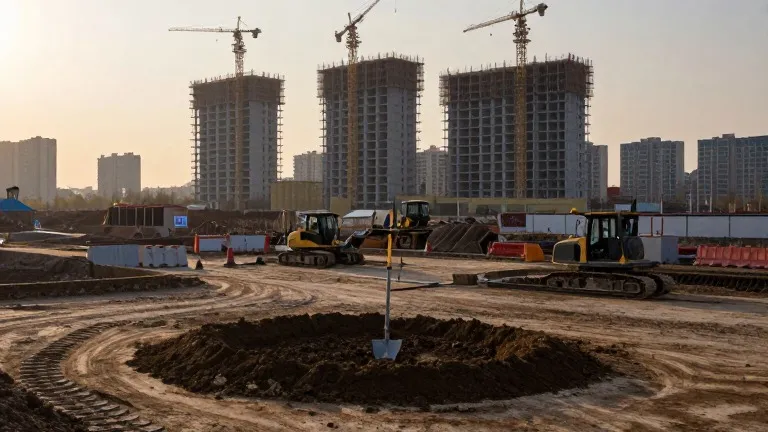
The state of Hawaii has long struggled to find a viable financial model for large-scale urban housing, a challenge that has persisted for decades in the capital region. That challenge now meets a concrete solution as officials broke ground on Thursday for the initial phase of the Mayor Wright Homes redevelopment. This event marks the start of the most significant public housing construction project in the state’s history.
The site is a 15-acre plot located in the Kalihi-Palama district, just a short distance from downtown Honolulu. The Hawai‘i Public Housing Authority has partnered with developer Highridge Costa to replace the existing complex, which has stood for nearly 75 years. The current buildings are bordered by King Street, Liliha Street, and Vineyard Boulevard. Organizers state that the new construction will offer seven times the residential capacity of the current site.
A key feature of the new development is its shift toward a mixed-income model. Rather than serving only the very lowest income brackets, the project will accommodate a broader range of household earnings. Hakim Ouansafi, the executive director of the housing authority, emphasized that the ceremony was about more than just construction. "It's not simply about breaking ground. It is about breaking barriers," he said. He noted that the state must move beyond historical methods to solve future housing shortages.
The architectural plans include more than 2,400 new rental units, ranging from studios to five-bedroom apartments. In addition to rentals, the development will feature public housing units, condominiums available for purchase, and commercial space. All of these components will be distributed across ten separate towers. This density is designed to maximize land use in a prime urban location.
Financial incentives and affordability constraints are central to the project's structure. Over half of the units are reserved for tenants earning below 80% of the area median income. Future phases will expand this eligibility to households earning up to 100% of the area median income, a figure estimated at roughly $150,000 annually for a family of four. Displaced residents of the current Mayor Wright complex are being relocated and will receive priority status for returning to the new buildings.
Gov. Josh Green framed the initiative as a core component of the state’s broader housing strategy. "Housing provides health," he stated, arguing that stable living conditions allow residents to focus on other critical areas like education and food security. Moe Mohanna, president of Highridge Costa Development Company, highlighted the scale of the partnership. He described the undertaking as a legacy project for the state, praising the government for accepting such a large-scale development challenge.
Ouansafi stressed the importance of modernizing the standard of care for public housing residents. "Public housing should never mean second class housing," he said. He argued that residents deserve safe, modern homes situated in communities where poverty is not concentrated in a single area. This approach aims to integrate public housing into the broader urban fabric rather than isolating it.
The financial scope of the project is substantial. The housing authority estimates the first phase, designated as Phase 1A, will cost $333 million. For context, the state’s 2017 estimate for the entire redevelopment was $1.3 billion. The project also includes four acres of public parks and recreational space. The design ensures the development is within walking distance of the planned Iwilei rail station, linking residents to the new transit infrastructure.
Honolulu Mayor Rick Blangiardi connected the housing project to the upcoming Skyline rail line, calling the combination historic for the region's affordable housing sector. The first building is scheduled to open in 2029. The full redevelopment is expected to take 15 years to complete. Further details regarding the project can be found at mayorwrighthomes.com.
Source: Hawaii News Now
More Business · Honolulu news · Business Watchdog · Report a business