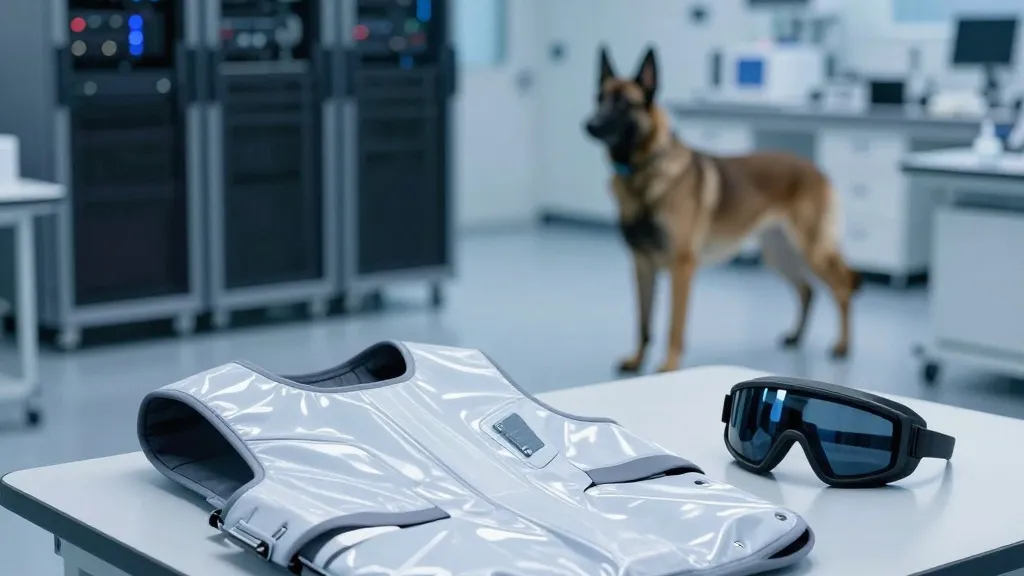
Palmer Luckey Startup Warhound Raises $200 Million for Gene-Edited Military Canines
The company plans to use genetic modifications to improve dogs' explosive detection abilities, with Sequoia and Colossal Biosciences backing the effort.
By Jonathan Pierce ·
A new biotechnology firm founded by Palmer Luckey aims to genetically modify dogs for military service. The company, Warhound, announced it has raised $200 million from investors to develop canines with enhanced sensory capabilities. According to reports published on 23 October 2026, the primary goal is to create animals that can more effectively detect explosives and protect troops on the battlefield.
Warhound secured funding from several major backers, including the venture capital firm Sequoia. The startup also announced a partnership with Colossal Biosciences, which will assist with the technical processes of cloning and gene editing required to modify the dogs' DNA. The collaboration marks a shift in military procurement toward biological enhancements for animal assets.
In a separate development within the biotech sector, researchers announced that a new gene editing tool called prime editing has been applied to its first human patient. The technique rewrites DNA specifically in liver cells, representing a new method for correcting genetic errors in the human body.
Moderna and Merck reported results from a clinical trial for an mRNA cancer vaccine. The data showed that the vaccine reduced death rates by 42 percent among patients with melanoma. The treatment also lowered the risk of cancer recurrence, providing a new option for patients dealing with aggressive skin cancer.
Cybersecurity officials continue to manage a set of vulnerabilities discovered in the PHP programming language. Although the flaws caused some websites to go offline globally, experts note that the bugs are more difficult to exploit than initially feared. No successful attacks have been confirmed since the disclosure. Website operators were advised to apply patches immediately to secure their systems.
Software developer Ian Landsman praised volunteer Ondřej Surý for his work on patching the PHP vulnerabilities. Landsman described Surý as an unsung hero of the internet. "If anything happens to this guy, that's just it. Everyone is screwed," Landsman wrote on X.
The military dog project adds to a growing list of high-stakes biological bets in the tech industry. Warhound's plan relies on the assumption that genetic edits can reliably improve a dog's working performance. The company will now move forward with the development process using the newly acquired capital.
Source: MIT Technology Review