1 Million Taiz Residents Face Water Crisis as Houthi Siege Blocks Supply
Bottled water costs have risen 75 percent, forcing families to stretch daily rations of 10 liters over four days.
By Jian Chen ·
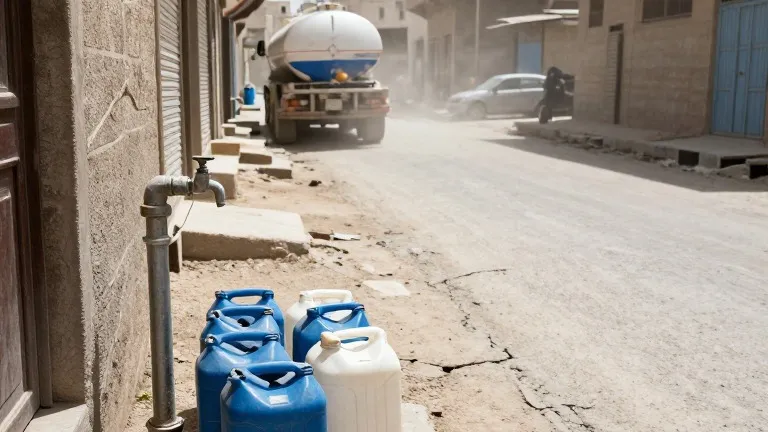
Aid organizations report that drinking water access in Taiz has reached crisis levels, affecting more than 1 million residents. Iran-backed Houthi rebels have tightened their siege on the Yemeni city, blocking water trucks and restricting access to wells as fighting with government forces escalates.
Families are rationing water to survive. Hadil al-Shahid, who lives with two young children, said her family previously used about 10 liters of bottled water per day for drinking and cooking. They now stretch that same amount to last four days. Al-Shahid stopped drinking coffee and tea to save water. Bottled water prices have increased by as much as 75 percent compared to a few weeks ago, leading some households to purchase supplies on credit.
The siege has created shortages beyond water. Grocery prices have risen, and fuel scarcity has reduced the capacity of desalination plants and hospitals. Amnesty International urged the Houthis to open roads into the city immediately, warning that Taiz faces a severe humanitarian disaster. Cooking gas prices have more than quadrupled, according to Hani Bafaqih of CARE, causing some families to burn wood, charcoal, or cardboard for heat.
Taiz province has absorbed an estimated 124,000 displaced people since August, roughly half of those moved elsewhere in Yemen, according to United Nations migration experts. Jens Laerke, a spokesperson for a UN emergency aid division, said some displaced families live in makeshift shelters and survive on one meal a day. Fuel shortages have also shut down waste collection services, increasing the risk of disease including cholera as families use unprotected wells.
The conflict has intensified since the Houthis captured the port city of Mokha last month. The rebels control about 80 percent of the surrounding countryside and several neighborhoods inside Taiz, according to three anonymous Houthi officials. Foreign Minister Afrah al-Zouba acknowledged the tightening grip on the city. Earlier this week, Houthi missiles hit a residential area, killing two teenage girls.
Residents remain in the city due to limited options. Ahmed Abdel Gaber, displaced with nine relatives, said his income from hauling construction material is no longer steady and he relies on donations for food. Al-Shahid closed her hair salon as customers prioritized food and water. Her children now eat mostly rice, bread, and cheese. Al-Shahid stated that staying in their home is inevitable, whether it becomes a matter of life or death.
Source: NPR