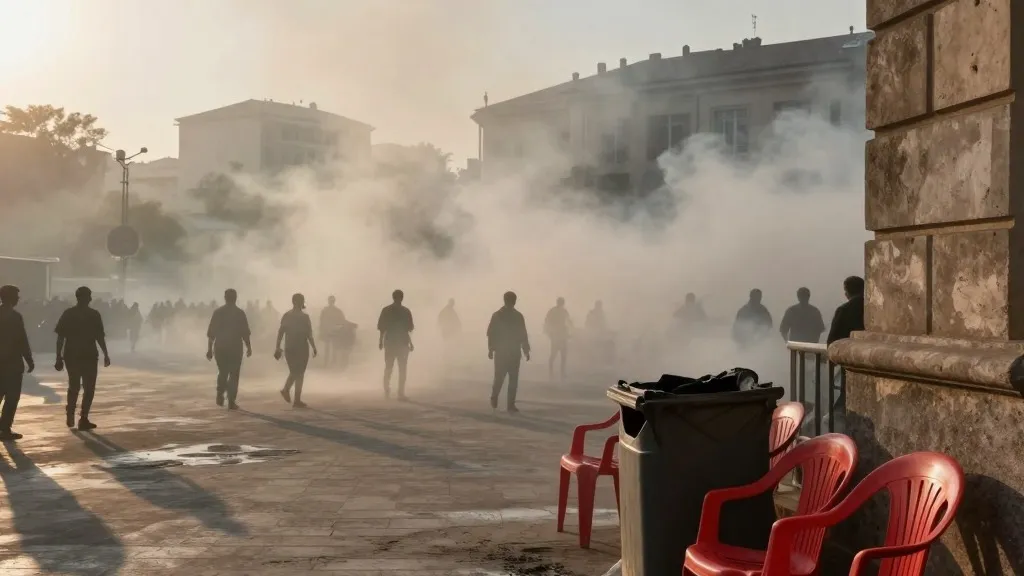
500 Soldiers Deployed as Italy Faces New Wave of Youth Unrest
The Italian government has mobilized military forces and expanded youth detention capacity in response to a new round of protests targeting the cost of living and perceived authoritarianism.
By Kendra Konchanuk ·
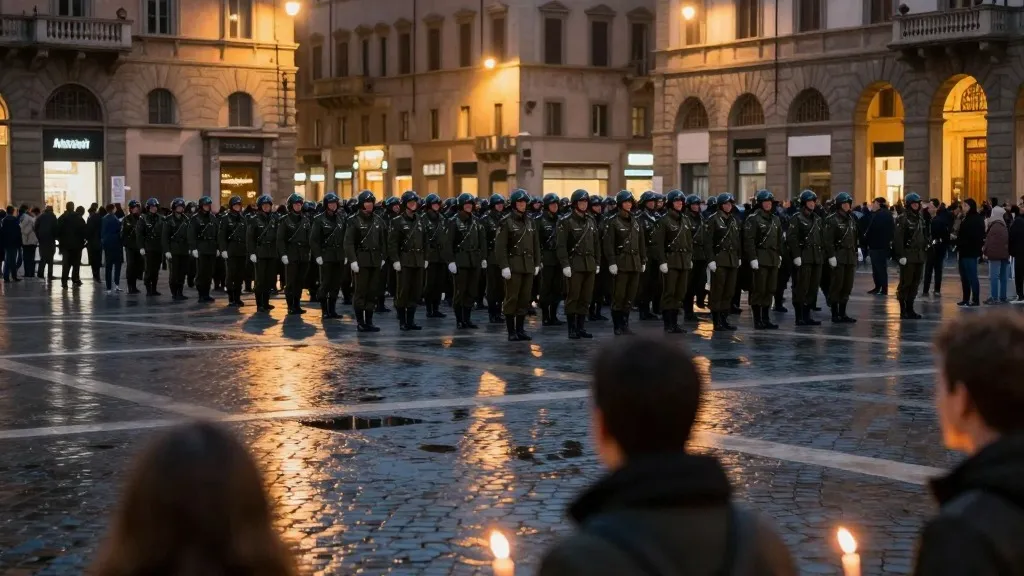
The Italian government has deployed 500 soldiers to Milan, a move that underscores the escalating tension between the state and a growing youth movement. This military reinforcement of the country's financial hub marks a significant shift in how authorities are handling domestic dissent. It follows a turbulent week in which a protest in the city turned into clashes with police and widespread looting. The deployment is part of a broader package of security measures announced by the administration of Prime Minister Giorgia Meloni. These actions aim to restore order ahead of a new series of demonstrations scheduled for Saturday across eight different cities.
The upcoming protests are organized by the October 17 Movement, a recently formed coalition that includes student federations, grassroots trade unions, and antiwar groups. The movement has positioned itself as a primary driver of the current unrest. On social media, the group has expressed deep distrust of the current right-wing government, describing it as authoritarian. They argued that those who deny the future of young people are engaging in a form of violence. This framing highlights a growing disconnect between the working class and the political establishment regarding the rising cost of living.
In the lead-up to Saturday's events, police conducted intensive operations to identify participants involved in the previous weekend's disorder. On Friday, officers carried out raids and searches in several cities targeting individuals suspected of looting and rioting. According to the news agency Adnkronos, the efforts continued into Saturday morning with 150 additional raids in the northern region of Lombardy. These actions reflect a strategy of preemptive policing aimed at disrupting the organization of the new demonstrations before they fully begin.
Organizers of the new protests have adopted a cautious approach to logistics. They have kept the specific locations of the demonstrations secret until the final moment to prevent targeted policing. Three meeting points are expected to be announced on social media accounts on Saturday afternoon. Meanwhile, police have located and are questioning the administrator of the movement's Instagram page. The individual is a 30-year-old Italian-Moroccan freelance journalist and researcher. He is currently under investigation on suspicion of inciting crimes, a charge that has raised questions about the role of digital organizers in physical protests.
The demographic profile of those detained last Sunday reveals a striking pattern of youthful involvement. Of the 271 people arrested, 220 were under the age of 18. This high proportion of minors has prompted a reevaluation of how the justice system handles young protesters. The daily Corriere della Sera reported that some of the detained youths joined the protest after being unexpectedly added to a Telegram group. One participant noted that the group promised chaos and the opportunity to take goods, suggesting a mix of genuine dissent and opportunistic participation.
Legal representatives are highlighting the lack of awareness among some of the youngest detainees. Lawyer Michele D'Agostino, who is defending a 21-year-old and a 15-year-old, stated that the teenager did not understand the reasons behind the protest. He had seen it on TikTok and decided to attend with a friend. Although the teen was not among the looters, he did not grasp the seriousness of the situation. This case illustrates how digital platforms are shaping the composition and behavior of protest crowds.
The public prosecutor has placed part of the blame for the disorder on social media. He described the events as insurrectional acts that were fueled by online platforms misleading young people. In response to the mass arrests of minors, Justice Minister Carlo Nordio suggested a structural change in the justice system. He told Sky TG24 that the country needs to expand the capacity of its youth detention facilities. This proposal indicates a long-term policy response to what officials view as a recurring issue of juvenile involvement in urban unrest.
The unrest is not limited to urban centers. Separately, truck drivers in several regions of southern Italy have set up roadblocks to protest soaring fuel prices. These blockades have left many markets without supplies for days, adding to the economic pressure on families. In an effort to ease the strain, the government granted tax breaks and created a special fund for farmers and fishermen on Thursday. These measures aim to address the immediate economic grievances that are fueling the broader wave of discontent.
The situation on Saturday will serve as a critical test for the government's new security strategy. The movement has emphasized the importance of peaceful dissent, with participants warning against giving police an excuse to charge. One member identified as E stated that the group must remain peaceful to avoid a violent response. Another member, identified as Q, argued that there is no distinction between violent and peaceful protesters, asserting that it is simply a matter of us. As the demonstrations proceed, the outcome will likely determine the trajectory of the government's approach to civil liberties and public safety in the coming months.
Source: Al Jazeera