Ukrainian military restores full access to satellite communications after ten days of disruption
The government confirmed that speed limits on Starlink terminals have been lifted, allowing for the resumption of critical defense operations against drones and missiles.
By Mei Ling ·
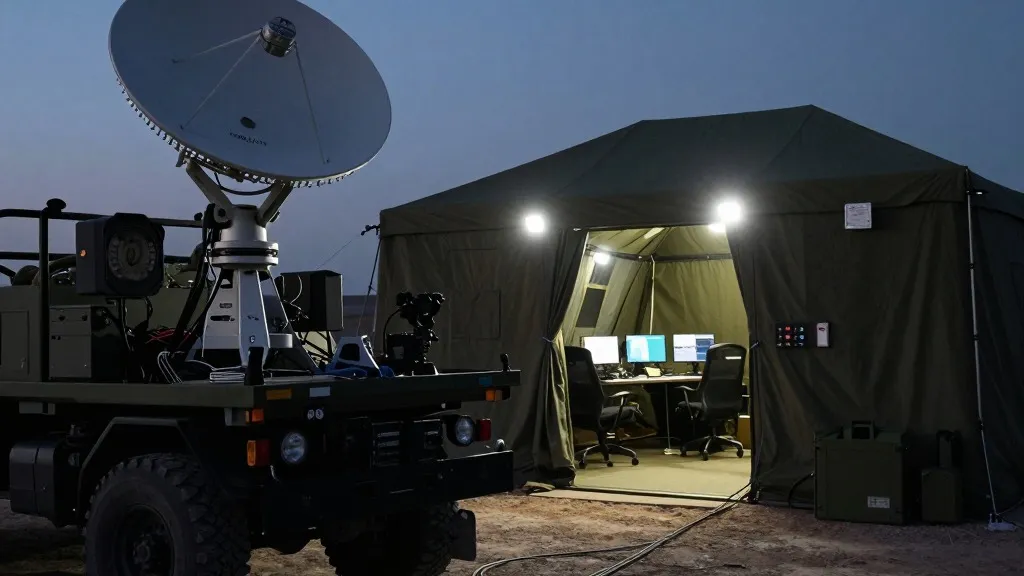
The Ukrainian government has confirmed that its military forces have regained a stable connection to the Starlink satellite network. This development marks the end of a ten day period during which the system's capabilities were sharply reduced. The restoration was announced by President Volodymyr Zelenskyy in a video address on Telegram, where he expressed gratitude to US allies for resolving the issue. The return to full functionality is significant because the satellite system is a core component of Ukraine's modern defense infrastructure.
The technical specifications of the disruption provide a clear picture of the impact. For the past ten days, the terminals were subject to sudden speed limits that capped operations at 160 kilometers per hour, or 99 miles per hour. This restriction was not a total outage but a throttling of data capacity. It was enough to cause several combat missions to fail. The limits specifically hampered the military's ability to intercept Russian attack drones. Additionally, some planned operations to strike targets behind enemy lines had to be cancelled due to the lack of sufficient bandwidth for real time coordination.
The people involved in the dispute include high level officials from both the US and Ukraine, as well as the private sector leader who owns the technology. Elon Musk, the chief executive of SpaceX, is the key figure in the private sector. The terminals are manufactured by SpaceX but are managed by the US government. This dual structure created a complex web of responsibility when the limits were applied. The US President, Donald Trump, was also central to the narrative, as the restrictions coincided with his announcement of a US deal to buy Russian diesel. This timing fueled speculation about the political motivations behind the technical changes.
The initial reaction from US leadership was one of careful distance from the decision. Trump initially denied that his administration was behind the cut in intelligence sharing. He stated, "I don't know if it was anybody, but it wasn't me, and I don't think it was Elon," referring directly to Musk. Secretary of State Marco Rubio reinforced this distance when he defended the President last Wednesday. Rubio noted that the President does not run the company and cannot direct it to do anything. He placed the decision making squarely with Starlink and Starshield, the military version of the system, and with Musk himself.
Musk responded by placing the responsibility on the US administration. In a post on X last week, he argued that the systems are "owned and controlled by the US government." He claimed that any limits on speed or usage are decided by the US military and ultimately by the President. Vice-president JD Vance supported Musk's position on Thursday. Vance suggested that Musk did not want to get in the middle of a war between two state actors without the US government effectively directing him. This exchange highlighted the tension between the private entity that built the system and the public body that funds and manages it.
Zelenskyy took a different stance, blaming both sides for the disruption. He stated that it was a message from the American government to limit the speed, and technically, SpaceX did it. He pointed out that Starshield terminals in European Union countries did not face similar restrictions. The limits applied only to Ukraine. Zelenskyy described the event as a planned operation and warned that the decision would bring human losses. His comments underscored the stakes involved, linking the technical speed of data transfer directly to the survival of soldiers on the ground.
The resolution of the issue was announced on Saturday. Zelenskyy said that Starlink and Starshield had resumed operating at their pre restriction speeds. He noted that the restoration began overnight and that by morning, the speeds were sufficient for operational use. This matters significantly for frontline logistics. It also allows for the effective defense against jet powered Shahed drones, which require fast data processing for interception. The President thanked US allies, including Trump and the State Department, for helping to fix the problem.
The path to this resolution was not entirely smooth. Earlier in the week, the situation was less clear. On Thursday, Trump claimed the service was back at full speed. However, a European official speaking to the Associated Press denied that it was fully functioning at that time. On Friday, Trump was asked if he would tell Musk to stop messing around with Ukraine's access. He said he had not spoken to Musk but might have to. He added, "If there is a problem, I'll get it straightened out," while also calling Musk "very brilliant" and "very good." These comments illustrate the ongoing negotiation between the political and technical leaders involved in the system's management.
The restoration of full speed is a critical moment for the ongoing conflict. The ability to share real time data is essential for modern warfare. The ten day gap represented a significant vulnerability for Ukraine. It forced commanders to rely on slower communication methods or to pause certain operations. The return to normal speeds allows for the seamless integration of drones, missiles, and ground forces. This event highlights the increasing importance of satellite communications in military strategy. It also serves as a reminder of the complex interplay between private technology companies and government agencies in times of crisis.
Source: The Guardian